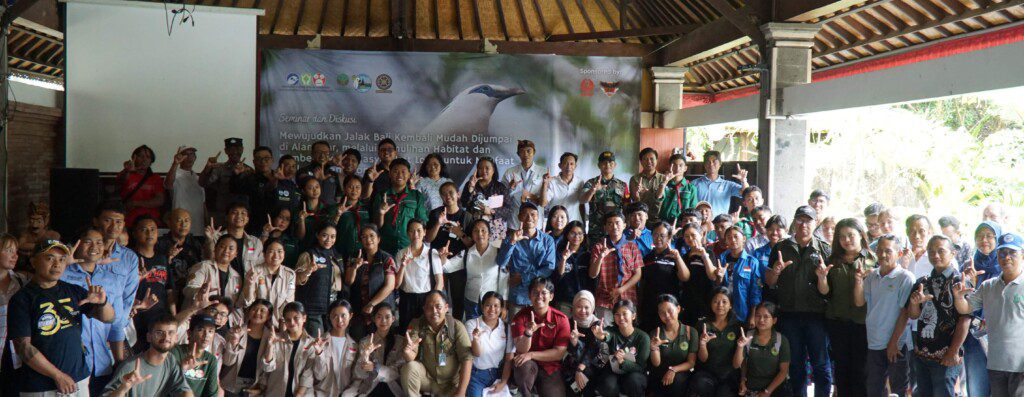
Tabanan, Bali | Thursday, December 11, 2025 — As Indonesia blessed with incredible biodiversity, Indonesia has a wonderful opportunity—and a shared responsibility—to protect its unique wildlife. The iconic Bali Starling (Leucopsar rothschildi), one of our most beautiful endemic birds, is currently listed as Critically Endangered. This makes every effort to save it crucial for future generations.
To help answer this call, Friends of Nature, People and Forest (FNPF) held a special seminar and discussion titled “Bringing Bali Starlings Back to the Wild: Restoring Habitat and Empowering Local Communities for Ecological and Economic Benefits.” This event was made possible with the kind support of ASAP (The Asian Species Action Partnership), Sintesia Animalia Indonesia, and Palang Merah Indonesia. The day continued with a heartwarming visit to the Kampoeng Jalak Bali community project and the release of two pairs of Bali Starlings into their natural home. Held at Nami Rasa Restaurant in Tabanan, the seminar brought together 126 wonderful participants from all walks of life to share progress, strengthen collaboration, and discuss how to keep local communities at the heart of successful conservation.
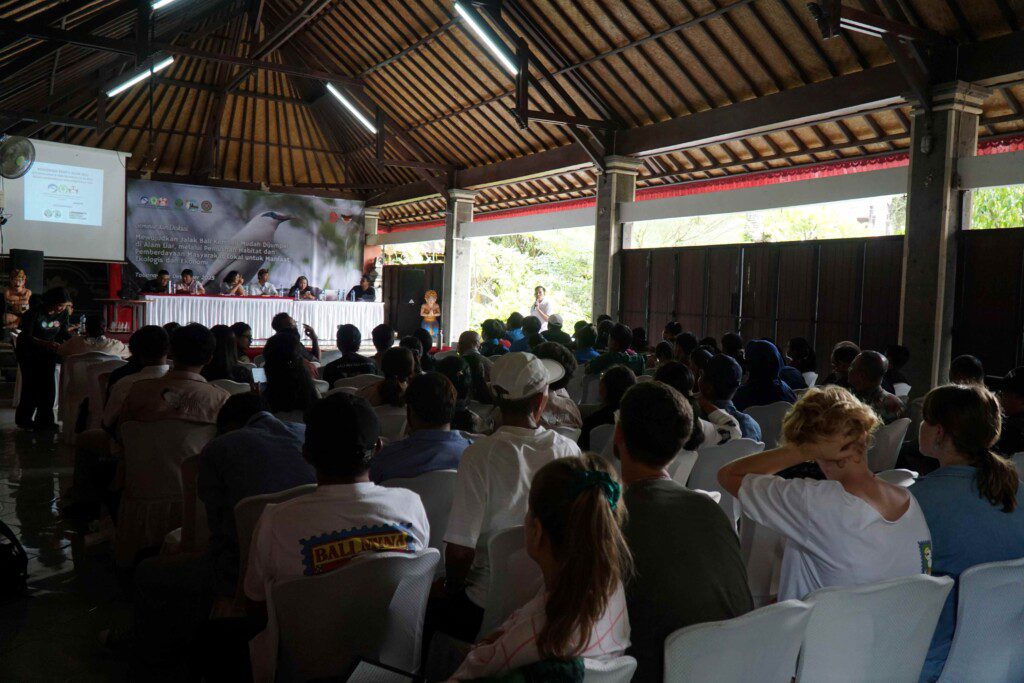
Celebrating Community-Led Conservation In his opening remarks, the Secretary of Penebel District expressed his deep appreciation for the conservation work that has helped Bali Starlings return to more areas, hoping this community model can be an example for protecting other species. A representative from the Bali Natural Resources Conservation Agency (BKSDA), Kadek Andina Widi A., emphasized that a shared commitment is the key to making Bali Starlings a common sight in our forests once more.
Presentations from various speakers highlighted heartening successes:
- FNPF, Drh. I Made Sugiarta shared the journey of its programs in Nusa Penida (since 2004) and the Besikalung Wildlife Sanctuary (since 2011), both built on local wisdom (awig-awig) and full community involvement. This success inspired the birth of Kampoeng Jalak Bali in Tengkudak Village (2024), which has blossomed into a thriving ecotourism destination in just one year.
- BKSDA Bali reaffirmed that the Bali Starling is a protected national treasure. Its recovery depends on strong cooperation between in-situ (wild) and ex-situ (captive) conservation, and the growing population shows the important role of local communities and conservation partners.
- Representatives from Ped Village, I Wayan Darwata (Nusa Penida) and Babahan Village, I Made Sukapariana (Tabanan) shared inspiring stories of conservation’s double benefit: the return of the birds has also brought positive economic change through nature-based tourism.
- West Bali National Park (TNBB), I Putu Gede Arya Kusdyana, S.Hut., M.Sc, and Udayana University’s Ornithology Research Center, Prof. Ni Luh Putu Eswaryanti, S.Si., M.Sc., Ph.D highlighted the importance of a holistic approach and the bird’s ecological role in maintaining balanced ecosystems.
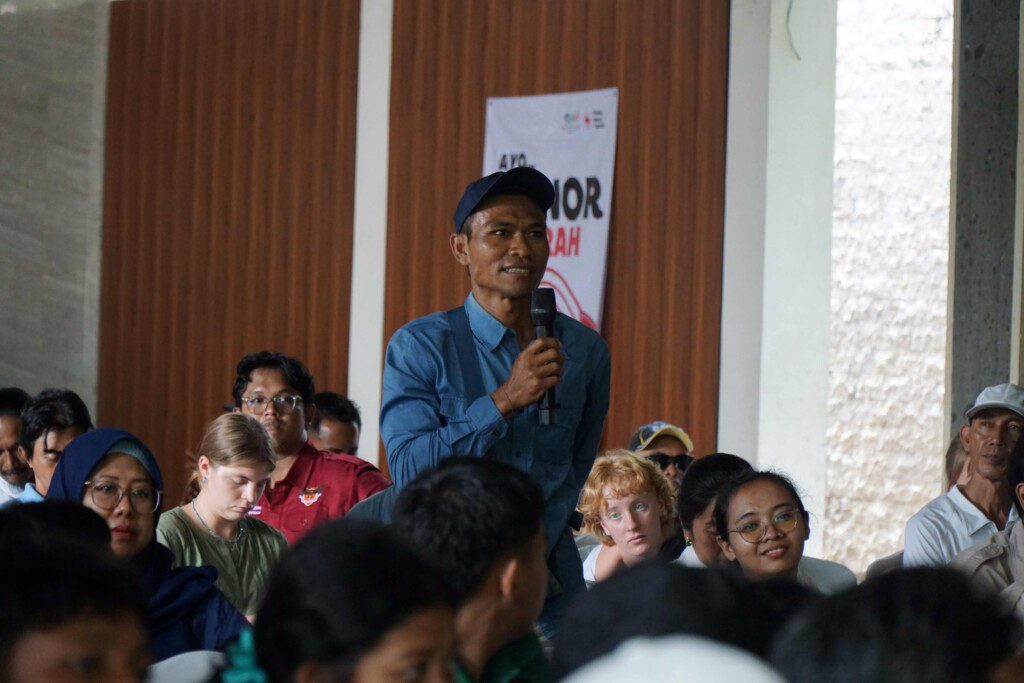
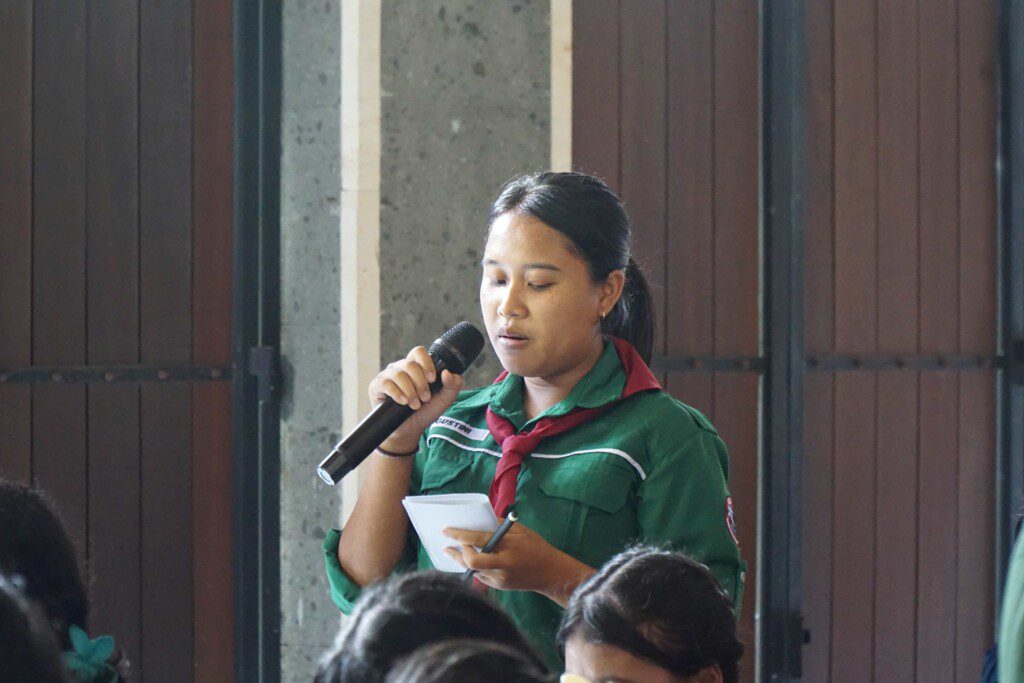
Shared Insights and United Commitment The discussion highlighted the importance of working together between wild and captive breeding programs, the strength of local customary law, and the need for ongoing education to protect the birds. Today, the wild population is estimated at around 500 birds, with another 300 birds in conservation breeding—a hopeful step away from the brink of extinction two decades ago. A lively Q&A session, including enthusiastic questions from young nature lovers (Sispala), discussed topics such as licensing, waste management, and the role of breeding centers in supporting wild populations.
Witnessing Hope Firsthand After the seminar, participants visited Kampoeng Jalak Bali in Tengkudak Village to see this participatory conservation model in action—a tangible example of how protecting nature can also nurture community livelihoods.
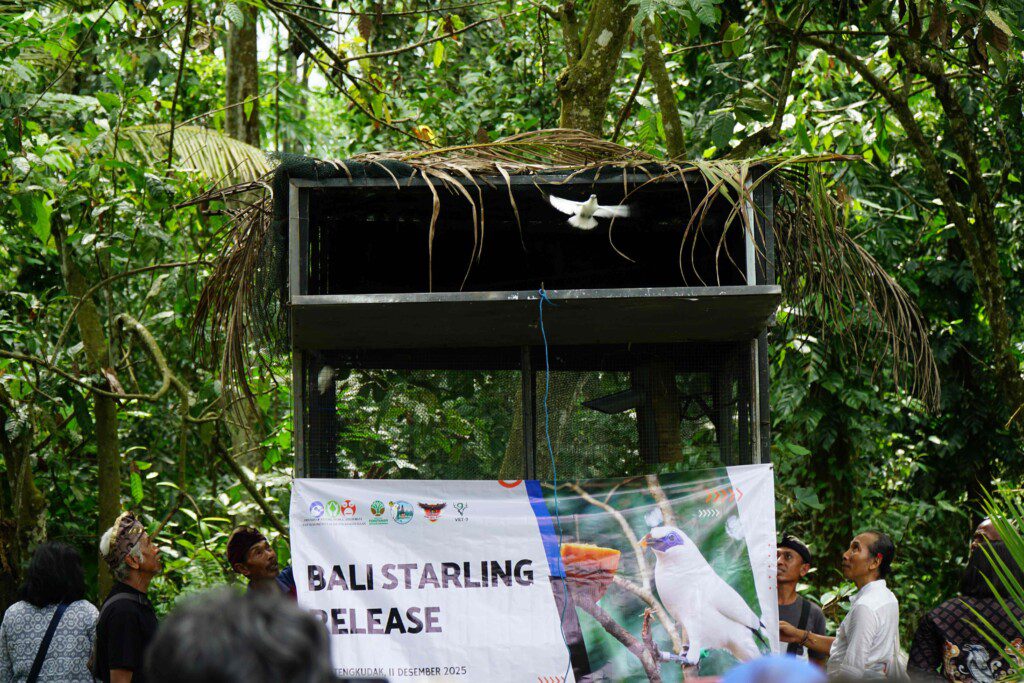
The day ended with a moment of hope: two pairs of Bali Starlings, rehabilitated by Bali Wildlife Rescue Center, were released at Kampoeng Jalak Bali. This release shows our shared commitment to rebuilding a self-sustaining wild population and strengthens the role of local communities as protectors of their natural heritage.
Looking Forward with Hope Through series of activities, FNPF hopes that this proven model of community-based conservation will grow stronger and inspire similar efforts across Bali and Indonesia. We believe that saving the Bali Starling is not just about protecting a species; it’s about nurturing a future where ecological health, community well-being, and sustainable economies flourish together.